01
Research & strategy
Business, competitor, keyword and search-intent research. Priorities first; content calendar second.


Kato360 takes ownership of the SEO work that tends to stack up: research, content, technical SEO, AI visibility, local, authority, publishing and reporting. Most of our delivery is white-label for other agencies, but we also work directly with businesses and support in-house marketing teams when capacity is tight.
The brief can be one workstream or the full programme. We are useful when the strategy is clear but the team needs dependable delivery — or when the strategy itself still needs to be built.
Business, competitor, keyword and search-intent research. Priorities first; content calendar second.
On-page work, commercial pages, site architecture, indexing and ongoing optimisation.
Entity clarity, answer-led content, topic coverage, structured information and external trust signals.
Blogs, service pages, location pages, money pages, FAQs, PR content and website copy.
Audits, crawl/index issues, redirects, metadata, schema, sitemaps, robots controls and site health.
Business information, profile optimisation, local pages, reviews, citations and map visibility.
PR, backlinks, citations, brand mentions and off-site authority tied to the search strategy.
From approved document to live page, QA, performance tracking and the next optimisation cycle.
We do not need to replace the team that is already there. The useful role is often much simpler: take ownership of the search work that keeps getting pushed to next week.
Overflow or full white-label SEO delivery. We can stay invisible, join selected client calls, or operate as the search function behind the agency.
Useful when one team is carrying strategy, campaigns, content, website work and reporting at the same time. We take the search backlog without disturbing the wider calendar.
For businesses that want SEO, AI visibility, content, technical work and authority managed as one ongoing programme.
This is not a revenue chart. It shows the onboarding year of accounts that are still active in the current database — useful because it shows both older relationships and the pace of recent growth.
The largest concentrations are in South Africa, the UK and the US. The service mix changes by industry, because a local trades business, a safari lodge and a tax firm should not receive the same search plan.
A few examples of how the focus changes once the market, buying journey and search environment are understood.
Local service SEO, location pages, technical cleanup, conversion-focused service pages, GBP work and practical content around specific jobs, repairs and buying decisions.
Destination and venue search, seasonal demand, local visibility, accommodation or service pages, experience-led content and digital PR/authority.
Category structure, product-support content, internal linking, technical SEO, schema and clearer information for both search engines and AI systems.
High-trust service content, compliance-aware editorial, technical accuracy, authority building, PR and search-intent mapping around commercial decisions.
Agency sites, creative studios, branding and experiential work. Often the need is an SEO layer that the existing creative team does not want to build internally.
Course and programme architecture, informational demand, commercial course pages, technical visibility and AI-search coverage around high-intent questions.
Technical products and services, commercial page depth, B2B search intent, content accuracy and authority in markets where generic copy performs badly.
Complex services, long sales cycles, comparison-led search behaviour and a constant need to turn technical expertise into pages buyers can actually understand.
Local and commercial service visibility, reputation, category depth and high-intent customer journeys.
High-consideration decisions, clear product/service information, careful claims, local trust and content that helps people choose rather than overwhelms them.
A useful case study needs context. These results came from a South African mobility and home-care equipment retailer — not a simple brochure site.
The business sells mobility and home-care equipment online and through a showroom, with nationwide delivery, selected rentals, medical-aid support, servicing and repairs. Its range spans wheelchairs, scooters, adjustable beds, patient lifters, pressure care and bathroom aids.
The site already had strong category coverage, but parts of the content estate were competing with each other. Several pages targeted the same rental intent, some topics were overdeveloped, and high-consideration buyers needed clearer decision support rather than another generic article.
SE Ranking tracking shows a material improvement across the anonymised account. The keyword set expanded during the period, so percentage share and average position are the cleaner like-for-like signals.
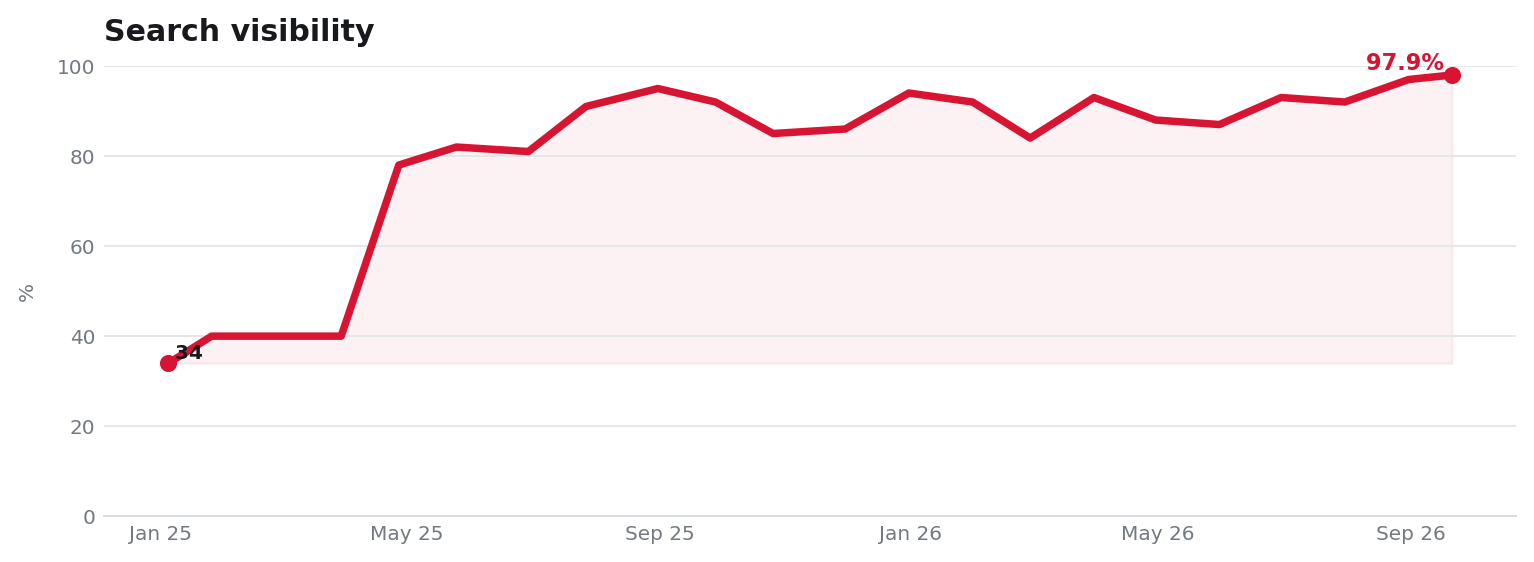
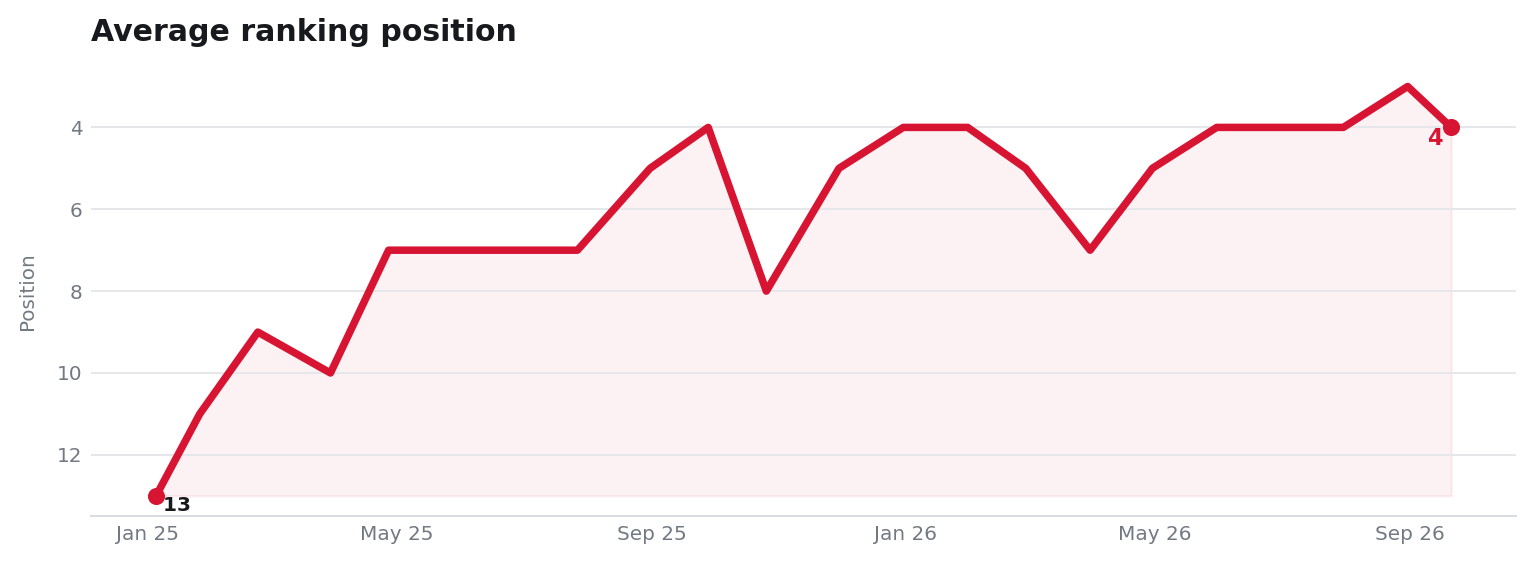
One account can be a fluke. The more useful test is whether the same operating model can produce useful signals in very different markets.
791 tracked keywords currently in the Top 10. Current AI-search footprint: 993 brand-presence results, 2,455 link-presence results and 4,023 AI-opportunity traffic in the South African database.
Top-10 share 65% → 86%, with 126 tracked keywords currently in the Top 10 and 110 in the Top 5.
Top-10 share 64% → 71%. On the small monitored AI prompt set, Google AI Overview and AI Mode each showed 66.7% link and mention presence.
That is where we tend to be useful. Kato360 can support the person you hire, take on overflow, or own defined workstreams while your team keeps the client relationship and strategic control.
Bring one account, ten accounts or a particular workstream. Capacity can expand without adding a permanent seat every time the portfolio grows.
We can work behind your brand, inside your folders, using your approval process and reporting style.
Research, planning, content, technical work, local, publishing and reporting can sit in one delivery loop instead of being split across freelancers.
When a marketing department is overloaded, we can own the search backlog without disrupting the wider marketing calendar.
Prove the working relationship first. Then expand only if it makes sense.
 Optimized by Seraphinite Accelerator